Recite the Vajrasattva mantra
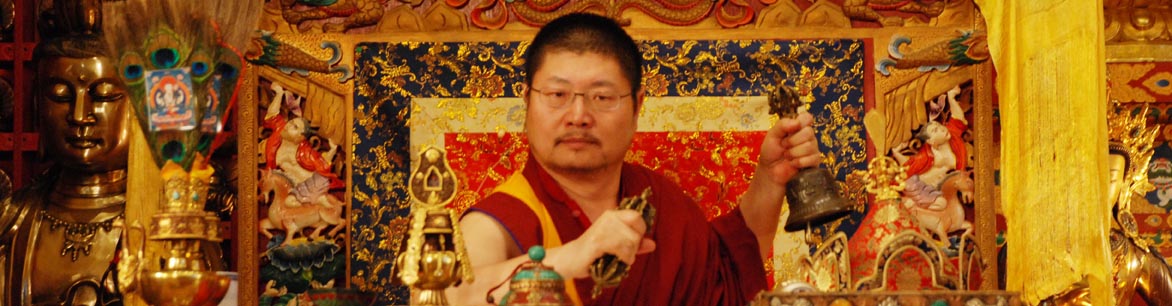 Beginning with the Vajrasattva practice, we will enter the preliminary practices of the generation stage and completion stage of the highest tantric teachings.
After receiving the Pratimoksha vows, Bodhisattva vows, and Vajra vows, practitioners must uphold pure precepts in order to attain all common and uncommon accomplishments. However, beginners' minds are filled with many afflictions and distracting thoughts, and a slight carelessness can destroy the purity of the precepts, thus creating obstacles and preventing them from achieving accomplishments. The Vajrasattva practice is the most supreme method that can completely eliminate these obstacles and karmic hindrances.
When Vajrasattva was practicing the Bodhisattva path, he made a vow: "As long as one hears His name, one's karmic obstacles will be completely eliminated. I will not become a Buddha until I have achieved such an ability." After making this great vow, he continuously accumulated merit and wisdom, and finally attained perfect Buddhahood. Therefore, He has the special ability to eliminate karmic obstacles.
The "Maharatnakuta Sutra, Mahayana Ten Dharmas Sutra" states that in the process of repentance, one must possess the four antidotes and repent sincerely. Only then can the karmic obstacles of sentient beings, which are as high and firm as Mount Sumeru, as deep and vast as the ocean, and as numerous as dust particles, be completely eliminated.
The four antidotes are "the power of reliance", "the power of aversion", "the power of return", and "the power of present action".
A、"Power of remedy based on reliance."
By relying on auspicious objects of worship to purify karmic obscurations, and with a sincere heart, openly and without concealment confessing all the sins committed, this is the "power of remedy based on reliance."
The "power of reliance" is divided into two types according to the object of repentance: "external reliance" and "internal reliance".
"The power of external reliance" involves visualizing Vajrasattva, the deity, above one's own head, and visualizing the mantra wheel, etc., in the heart of the deity, using Him as the object of repentance.
"The power of inner reliance" is "generating Bodhicitta," which is to vow to eliminate all karmic obstacles, diseases, afflictions, hindrances, demonic obstacles, and habitual obstacles for the sake of all sentient beings, and to achieve the merits, vows, and realizations of the Vajrasattva deity.
B、"The power of aversion"
"The power of aversion" is to sincerely repent for all the evil deeds one has committed since beginningless time, generating a strong sense of remorse and purification from within. The repentance should be as intense as if one had accidentally ingested poison; only by repenting with this mindset can one completely eliminate the karmic obstacles created in the past.
C、Return to the antidote
"Returning to the antidote" is a method to ensure that one will not commit evil deeds again in the future. That is, after repenting and purifying the evil deeds committed in the past, one must also firmly vow from the heart that one will never commit evil deeds again in the future. This vow of not committing evil deeds is "returning to the antidote".
D、" Current antidote"
The "current antidote" is the recitation of the "Hundred Syllable Mantra." While reciting the Hundred Syllable Mantra, simultaneously visualize nectar descending from the mantra wheel in the heart of Vajrasattva, entering through the crown chakra and pervading the entire body, purifying and eliminating all karmic obscurations, afflictions, illnesses, demonic obstacles, and habitual obscurations until complete purification. Then visualize the nectar descending to the crown chakra, throat chakra, heart chakra, navel chakra, and secret chakra. Finally, visualize Vajrasattva dissolving into light and merging into oneself. This is the preliminary practice of the "Completion Stage" in Tantra.
-
-
-
-
-
- Vows and Precepts
- Preliminary Foundations of the Path
- Generation Stage
- Meditation Practice
- Precious Human Rebirth
- Impermanence of All Things
- Infallible Cause and Effect
- Suffering of Samsara
- Liberation and Benefit
- Reliance on the Guru
- Refuge
- Prostration
- Generate Bodhicitta
- Vajrasattva Mantra Practice
- Accumulating Merit
- Guru Yoga
-
-
-
-